
Table of Contents
- What Is Paint Correction?
- Why Does Paint Correction Matter for Indian Cars?
- What Defects Can Paint Correction Fix?
- What Are the Main Types of Paint Correction?
- How Do You Know If Your Car Actually Needs Paint Correction?
- What Are the Risks of Paint Correction?
- What Happens Before and After Correction?
- Advanced: Why Test Spots Matter More Than Package Names
- Tools & Resources
- Getting Started
- FAQ
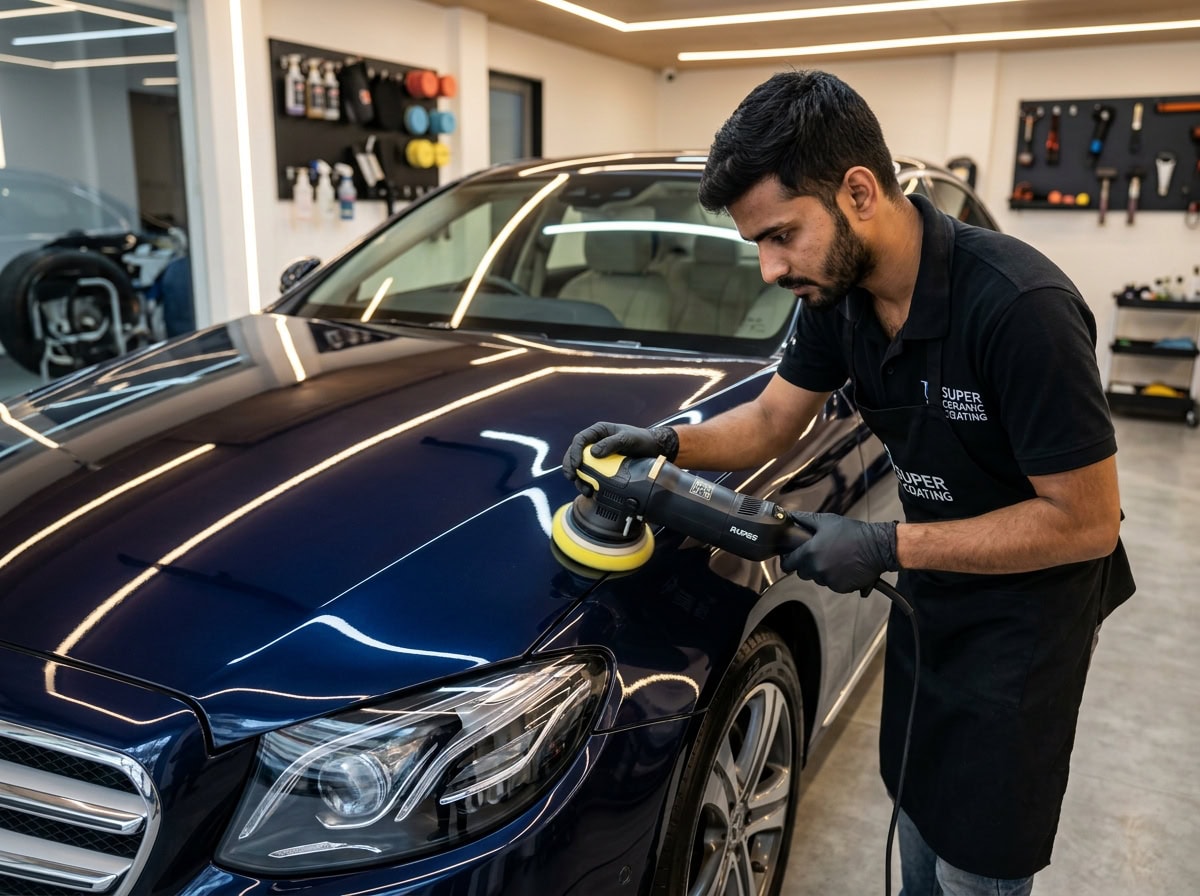
Paint correction is one of those phrases that sounds glamorous and expensive, but the basic idea is simple: you are refining the paint surface by removing or reducing defects in the clear coat. Done well, it can make a tired car look wildly better. Done badly, it can thin the clear coat for no good reason.
PPG says an OEM paint finish is only about 90–120 microns thick overall (PPG Refinish, accessed 2026). That one number is why paint correction should be treated with respect, especially in India where heat, dust, hard water, and careless washing create defects faster than many owners realise.
If you’ve ever wondered whether your car needs polish, compound, full correction, or simply a safer wash routine, this guide is for you.
TL;DR: Paint correction is the controlled removal of a tiny amount of clear coat to reduce defects like swirls, oxidation, haze, and light scratches. It works because many defects sit in the upper clear-coat layer, but OEM paint is only about 90–120 microns thick, according to PPG, so correction should be measured, not casual (PPG).
What Is Paint Correction?
Detailed Image describes paint correction as the process of re-levelling the clear coat to remove swirl marks, holograms, oxidation, etching, and scratches (Detailed Image, accessed 2026). That is the direct answer: paint correction is machine or hand polishing that levels the top surface enough to reduce visible defects.
It is not the same as a wash and wax. It is not the same as applying ceramic coating. It is not repainting.
Key parts of paint correction
- inspection under proper light,
- paint-safe washing and decontamination,
- test spot,
- polishing with the right pad and abrasive combo,
- inspection and refinement,
- protection after correction.
A lot of marketing packages call any shiny finish “paint correction.” Don’t fall for that. Real correction means defect removal, not simply hiding marks with glaze.
Citation capsule: Paint correction means re-levelling the upper clear-coat surface to reduce visible defects rather than simply masking them. Detailed Image defines correction around removing swirl marks, holograms, oxidation, etching, and scratches, which is why the term should not be confused with a basic wash-and-wax or a ceramic coating package (Detailed Image).
Why Does Paint Correction Matter for Indian Cars?
India’s car-care market reached USD 424.92 million in 2024, driven partly by rising awareness of coatings, premium products, and appearance-focused maintenance (IMARC Group, 2025). The answer is that Indian ownership conditions create paint defects quickly.
Think about the average daily reality:
– outdoor parking,
– dusty roads,
– apartment washing with hard water,
– wiping dirty panels,
– bird droppings,
– tree sap,
– monsoon deposits.
Even a new car can pick up swirl marks in weeks if washed badly. And once those marks are in the clear coat, simple shampoo will not remove them.
Why it matters more here
- Heat bakes contamination faster.
- Hard water leaves mineral deposits.
- Dust increases wash-induced marring.
- Traffic grime sticks harder to unprotected paint.
Citation capsule: Paint correction matters in India because defect formation is accelerated by the ownership environment, not just by car age. With India’s car-care products market at USD 424.92 million in 2024 and still growing, buyer behaviour already reflects that reality: more owners are paying for appearance restoration because heat, dust, hard water, and rough washing create visible damage quickly (IMARC Group).

What Defects Can Paint Correction Fix?
3M says rubbing compound removes oxidation, water spots, stains, and surface blemishes from automotive finishes (3M, accessed 2026). That tells you the boundary: paint correction is good at surface and near-surface defects, not deep structural damage.
Usually fixable or reducible
- swirl marks,
- light scratches,
- oxidation,
- water-spot etching,
- haze,
- holograms,
- dullness,
- light staining.
Usually not fully fixable by correction alone
- deep scratches through the clear coat,
- paint chips,
- peeling clear coat,
- rust,
- severe repaint failure.
Types of car scratches to understand
Clear-coat scratches: Most common. Often correctable.
Base-coat scratches: Deeper. Often need touch-up or repaint.
Primer-level damage: Too deep for safe polishing.
Transferred paint/scuff marks: Sometimes removable with surprisingly light correction.
Useful reality check: Many owners think every visible scratch needs repainting. Actually, a lot of ugly-looking marks are just in the clear coat and improve massively with proper correction.
Citation capsule: Paint correction is excellent for clear-coat-level issues such as oxidation, water spots, haze, and light scratches, but it is not a cure for paint chips or damage that has broken through the colour layer. 3M’s own defect-removal guidance supports that distinction by focusing correction compounds on surface-level blemishes and oxidation-related defects (3M).
What Are the Main Types of Paint Correction?
PPG’s 90–120 micron OEM paint figure is the best reminder that correction should be scaled to need, not to ego (PPG, accessed 2026). The direct answer is that paint correction usually falls into one-step, two-step, and multi-step correction.
1. One-step correction
This uses one polish-pad combo to improve gloss and remove moderate defects at the same time.
Best for: newer cars, mild swirls, resale prep, daily drivers.
2. Two-step correction
This starts with a heavier cut, then refines with a finer polish.
Best for: darker colours, moderate swirls, water-spot etching, neglected paint.
3. Multi-step correction
This adds extra refinement stages or targeted wet sanding.
Best for: show cars, enthusiast builds, severe defect work, sensitive soft paint.
4. Spot correction
Localised correction on specific panels or damage zones.
Best for: isolated scratches, door-handle marks, bird-dropping etching.
Citation capsule: Paint correction is not one thing; it is a scale of intervention. Because PPG puts total OEM film build at only about 90–120 microns, the safest correction plan is usually the lightest one that gets the result — one-step for mild defects, two-step for heavier damage, and multi-step only when the paint and goals genuinely justify it (PPG).
How Do You Know If Your Car Actually Needs Paint Correction?
Detailed Image notes that paint correction takes far more time and labour than ordinary detailing because it addresses real paint issues, not just dirt (Detailed Image, accessed 2026). The direct answer is simple: your car needs correction when washing no longer restores gloss because the defects are in the clear coat.
Signs your car may need correction
- swirl marks visible in sunlight,
- dull or grey-looking paint on dark colours,
- water spots that remain after proper wash,
- fine scratches around door handles,
- bird-dropping or tree-sap etching,
- holograms from past bad polishing.
Signs it may not need correction yet
- light dust only,
- contamination that can be clayed off,
- shine loss caused by dirty paint, not damaged paint,
- defects too deep for safe polishing.
The smartest first step is always an inspection wash, not booking the biggest package on the menu.
Citation capsule: Your car needs paint correction when the paint still looks defective after proper washing because the problem is embedded in the clear coat rather than sitting on top of it. Detailed Image’s distinction between ordinary detailing and true correction is useful here: if the issue is swirls, oxidation, or etching, washing alone will not fix it (Detailed Image).
What Are the Risks of Paint Correction?
PPG warns that excessive paint build and poor refinishing decisions can create durability problems such as cracking, gloss loss, and delamination (PPG, accessed 2026). While that note is about film build generally, the lesson is clear: paint systems have limits.
Main risks
- removing too much clear coat,
- burning edges,
- causing haze on soft paint,
- leaving holograms,
- chasing perfection on already thin paint,
- exposing weak repainted areas.
Correction should be planned, measured, and tested. Not done with blind confidence and a loud machine.
The premium move is restraint: A great detailer is not the one who removes every last mark. It’s the one who knows which marks are not worth the risk.
Citation capsule: Paint correction carries real risk because automotive paint is finite. PPG’s film-build guidance is the best anchor here: when total OEM paint is only around 90–120 microns, aggressive polishing without measurement, test spots, and edge awareness can trade a cosmetic improvement today for durability problems later (PPG).
What Happens Before and After Correction?
3M’s compound guidance shows that defect removal products are designed to address oxidation, water spots, and blemishes after preparation, not instead of it (3M, accessed 2026). The answer is that correction lives in the middle of a wider process.
Before correction
- wash
- chemical decontamination if needed
- clay treatment
- paint inspection
- masking trim
- test spot
After correction
- wipe-down and inspection
- refining pass if needed
- protection with wax, sealant, or ceramic coating
- safe maintenance plan
A corrected car without protection is like getting a facial and then walking into a dust storm.
Advanced: Why Test Spots Matter More Than Package Names
PPG’s thin OEM paint number and Detailed Image’s labour-heavy definition of correction together make one thing obvious: the paint decides the process, not the package name (PPG; Detailed Image).
If you’re already familiar with polishing, here’s the more advanced truth: test spots matter more than “Stage 1” or “Stage 2” branding because paint hardness, colour, history, and defect depth vary from car to car.
A soft black Japanese paint system may correct beautifully with a light combo. A hard German clear may need more cut. A repainted door may react completely differently from the OEM bonnet beside it.
So the best correction package is the one built from inspection, not from menu design.
Tools & Resources
Best starter tools:
– quality wash shampoo,
– microfiber towels,
– clay bar or mitt,
– dual-action polisher,
– medium polish,
– finishing polish,
– pad cleaning brush,
– inspection light.
Best for beginners: Dual-action machine and one-step polish system.
Best for enthusiasts: Separate cutting and refining systems.
Price note: Good towels and pads often matter more than chasing exotic chemicals.
Getting Started
The first step is simple: wash your car properly and inspect it in sunlight or under a focused light. That alone will tell you whether the issue is dirt, contamination, or real paint damage.
Then:
1. identify the type of defect,
2. test the least aggressive correction method,
3. stop if the mark is too deep,
4. protect the finish after any successful correction.
If you are unsure, do not start with the whole car. Start with one test spot.
Frequently Asked Questions
What is paint correction for cars?
Paint correction is the controlled polishing of a vehicle’s clear coat to reduce defects such as swirl marks, oxidation, haze, etching, and light scratches. It works by re-levelling the upper surface of the clear coat rather than simply hiding the damage with fillers.
How many types of car scratches are there?
The useful practical categories are clear-coat scratches, base-coat scratches, primer-level damage, and transferred paint or scuffs. Clear-coat scratches are the most correction-friendly. Deeper damage usually needs touch-up or repaint work instead of polishing alone.
Is paint correction the same as polishing?
Not exactly. Polishing is a tool or process within paint correction. A basic polish for gloss does not always mean real defect removal. Paint correction specifically refers to defect-focused polishing work that improves the paint surface visibly.
Can paint correction remove all scratches?
No. It removes or reduces only defects that are safely correctable within the clear coat. Since PPG places OEM paint thickness at about 90–120 microns, deep scratches cannot be chased indefinitely without risk (PPG).
Is paint correction worth it before ceramic coating?
Usually yes. Coating locks in the condition of the surface underneath, so correcting swirls, haze, or water spots first gives you a better final result. If you coat bad paint, you’ll simply preserve bad paint more expensively.
How long does paint correction last?
That depends on how you maintain the car afterward. Safe washing, clean towels, and protection matter more than the correction day itself. A beautifully corrected car can start looking tired again quickly if washed poorly.