Washing a motorcycle looks simple until you damage something small. A strong jet of water, harsh cleaner, or sloppy chain routine can create more trouble than the dirt ever did.
In India, bikes deal with dust, rain splash, chain grime, traffic soot, and tight parking every day. So the goal is not just a shiny bike. The goal is a safe wash routine you can repeat without hurting paint, plastics, seals, brakes, or electrical parts.
TL;DR: Wash your motorcycle with cool panels, low-pressure water, a neutral shampoo, soft microfiber tools, and a separate chain-cleaning step. SIAM reported 13,84,605 two-wheeler sales in February 2025, and Honda’s after-sales guide specifically warns against high-pressure washers, so simple, gentle technique is still the safest home method.
What should you do before washing a motorcycle?
SIAM reported 13,84,605 two-wheeler sales in February 2025 and 5.56 million two-wheeler sales in Q2 of 2025-26, showing how dominant bikes remain in daily Indian mobility (SIAM, 2025; SIAM, 2025). For that kind of daily-use machine, prep matters because a rushed wash usually misses hot parts and trapped grit.
Before you start:
- Park the bike in shade.
- Let the engine, exhaust, and brakes cool.
- Keep two buckets ready if possible.
- Arrange separate tools for painted panels and greasy areas.
- Put the bike on the centre stand or paddock stand if available.
Honda’s motorcycle washing advice is very clear here: do not wash during high-temperature condition and allow hot components to cool first (Honda Global, 2022).
The easiest way to make a bike wash safer is to reduce decisions mid-process. If your shampoo, towels, and chain supplies are laid out before the first rinse, you’re less likely to grab the wrong brush or let soap dry on the tank.
Citation capsule: SIAM counted 13,84,605 two-wheeler sales in February 2025 and 5.56 million in Q2 of 2025-26, underlining how central motorcycles remain in India. Honda’s own after-sales advice adds the key practical point: always let hot parts cool before washing and avoid creating damage in the name of cleaning.
Step 1: Rinse loose dirt with low-pressure water
Honda says owners should use low-pressure water and avoid high-pressure washers, because strong water can damage moving and electrical parts (Honda Global, 2022). That is the safest answer to the first wash step: remove loose dirt gently before you touch the surface.
Start from the top and work down. Rinse the windscreen, tank, seat cowl, side panels, fork area, swingarm, and wheels. Do not blast water into the exhaust end, air intake, switchgear, chain seals, wheel bearings, or under-seat electronics.
If mud is caked on the lower engine or mudguard, let water soften it first. Do not attack it with a stiff brush immediately.
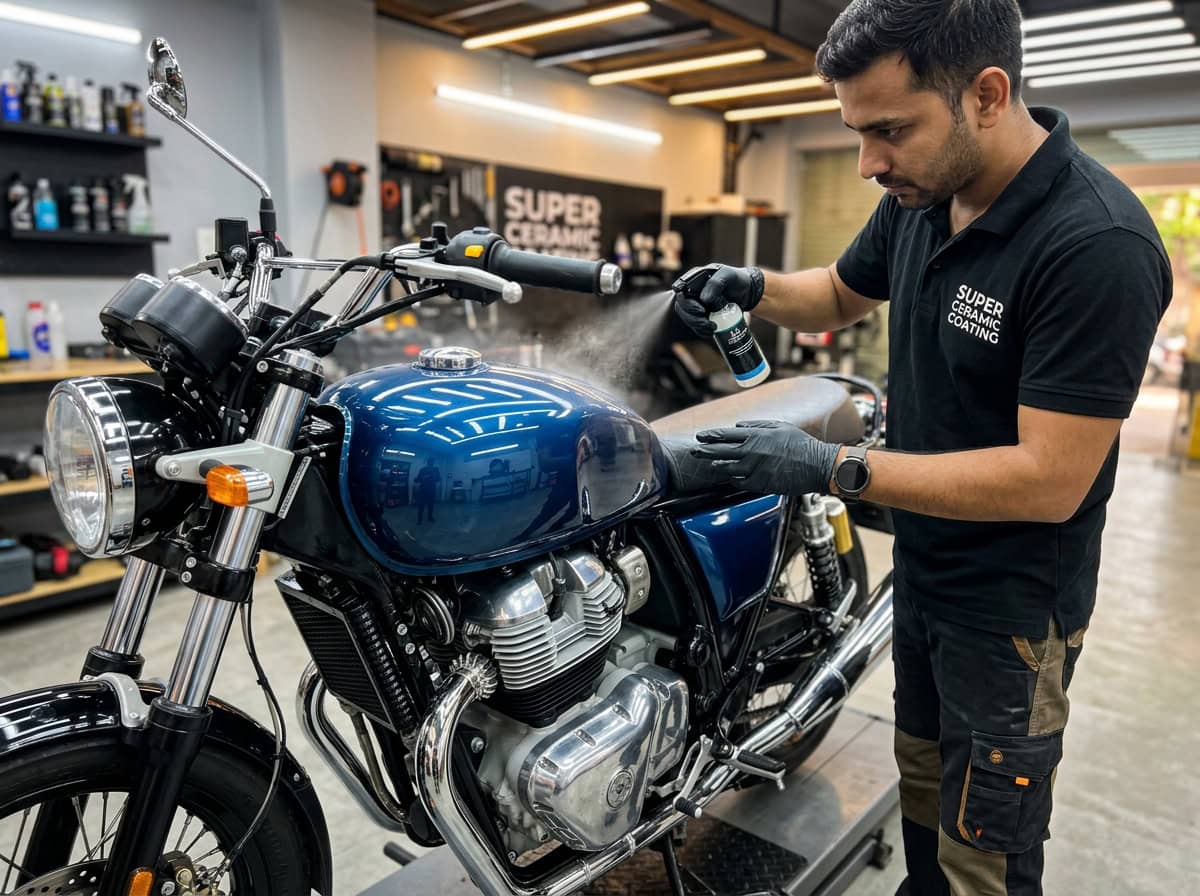
Citation capsule: Honda’s washing guide recommends low-pressure rinsing and warns against high-pressure washers because they can damage moving and electrical parts. For home bike washing, that means the first job is not scrubbing; it is safely removing loose dust and mud so your wash media does not grind debris into paint.
Step 2: Wash painted panels with neutral shampoo and soft tools
Honda recommends a neutral detergent for road grime and says owners should rinse thoroughly with clean water after washing (Honda Global, 2022). In practice, that means bike shampoo or pH-balanced car shampoo is a much safer choice than household cleaners.
Fill one bucket with shampoo solution and another with rinse water. Use a soft microfiber wash mitt for painted surfaces. Clean in this order:
- Mirrors and screen
- Tank and front cowl
- Side panels and tail section
- Front fender
- Lower painted areas last
Use a soft brush only for badges, panel gaps, and hard-to-reach areas. Keep wheel brushes separate from paint tools.
If your bike has matte paint or wraps, use even gentler products and avoid glossy dressings.
Most wash marks on bikes appear on tanks and front cowls because riders press too hard where they see bugs and road film. More shampoo and more passes are safer than more pressure.
Citation capsule: Honda’s after-sales guidance specifically recommends neutral detergent for stubborn road grime. That matters because bike paint and plastics are smaller and more exposed than many car panels, so harsh cleaners and aggressive scrubbing can dull gloss quickly even when the wash only takes a few minutes.
Step 3: Clean wheels, tyres, and the chain the right way
India had 263.4 million registered two-wheelers in 2022 according to CEIC’s presentation of Ministry of Road Transport and Highways data, which is why chain-and-wheel maintenance advice matters at scale. These are the dirtiest parts of the bike, so they need separate tools and more patience.
Use a dedicated wheel brush and cleaner for rims and spoke areas. For the chain:
- Use a chain-safe cleaner or recommended degreaser.
- Rotate the rear wheel slowly.
- Clean with a chain brush or soft nylon brush.
- Wipe dry.
- Lubricate after washing and drying.
Honda also reminds owners to lubricate moving parts after washing and to keep oil away from tyres and brakes (Honda Global, 2022).
Never spray tyre dressing onto the tread. Never get chain lube on brake discs.

Citation capsule: CEIC’s MoRTH-based dataset shows 263.4 million registered two-wheelers in India in 2022, so wheel and chain care is not niche advice. Honda’s maintenance guidance adds the critical follow-up: lubricate moving parts after washing, but keep oil away from tyres and brakes to avoid safety issues.
Step 4: Dry the bike properly and check key parts
Honda warns that water can reduce braking effectiveness and says riders should help dry the brakes after washing by applying them intermittently at low speed (Honda Global, 2022). So yes, drying is part of washing, not an optional final touch.
Use a clean microfiber drying towel or blower for:
- Tank and painted panels
- Around switchgear
- Mirrors and instrument cluster
- Wheels and spokes
- Chain area before lubrication
Then inspect the bike:
- Any rust on metal parts?
- Any oil seepage near the engine?
- Any cracked rubber boots?
- Any loose fasteners or broken clips?
Citation capsule: Honda notes that water adversely affects braking effectiveness and recommends drying the brakes after washing. For motorcycle owners, proper drying therefore does more than improve shine; it reduces water spotting, protects electrical areas, and helps you catch rust, leaks, or worn rubber during a routine clean.
What should you never do during a motorcycle bike wash?
ASTM D3363-related coating discussions use a pencil hardness range from 6B to 9H, showing how often marketing claims focus on surface hardness instead of maintenance reality (MatestLabs, 2024). In daily riding, bad wash habits still damage finishes faster than most owners expect.
Avoid these mistakes:
- Washing a hot bike
- Using detergent powder or strong degreasers on paint
- Pointing pressure directly at bearings, chain seals, switchgear, exhaust, or air intake
- Using one dirty cloth for everything
- Letting shampoo dry in direct sun
- Skipping chain lubrication after a full wash
Hard coatings don’t make a bike careless-wash proof. Gentle technique still wins.
Frequently Asked Questions
Can I use a pressure washer to wash my motorcycle at home?
It’s better not to. Honda explicitly says high-pressure water cleaners can damage moving and electrical parts. For home users, low-pressure rinsing is safer and more than enough for regular bike washing, especially when you pre-soak dirt and use proper shampoo.
Which shampoo is best for motorcycle washing?
Use a neutral or pH-balanced vehicle shampoo. Honda recommends neutral detergent for road grime, which makes it a safer choice than household dishwash liquids. A paint-safe shampoo also helps preserve wax, sealant, or coating already on the bike.
Should I clean the chain every time I wash the bike?
Not always, but you should inspect it every time. Honda advises lubricating moving parts after washing, especially the drive chain. If the chain is visibly dirty, noisy, or dry, clean and lube it after the bike is fully dry.
Why do my brakes feel weak just after washing?
Because water affects braking temporarily. Honda specifically notes that water adversely affects braking effectiveness and recommends applying the brakes intermittently at low speed after washing to help dry them out before normal riding.