You wash your car every week. Maybe even use a foam cannon. But here’s what’s actually happening inside while you’re detailing the outside: your dashboard is quietly cracking, your seat fabric is absorbing every spill, and those once-rich plastic trims are fading grey.
It’s not neglect. It’s just unprotected surfaces doing what unprotected surfaces do — deteriorate.
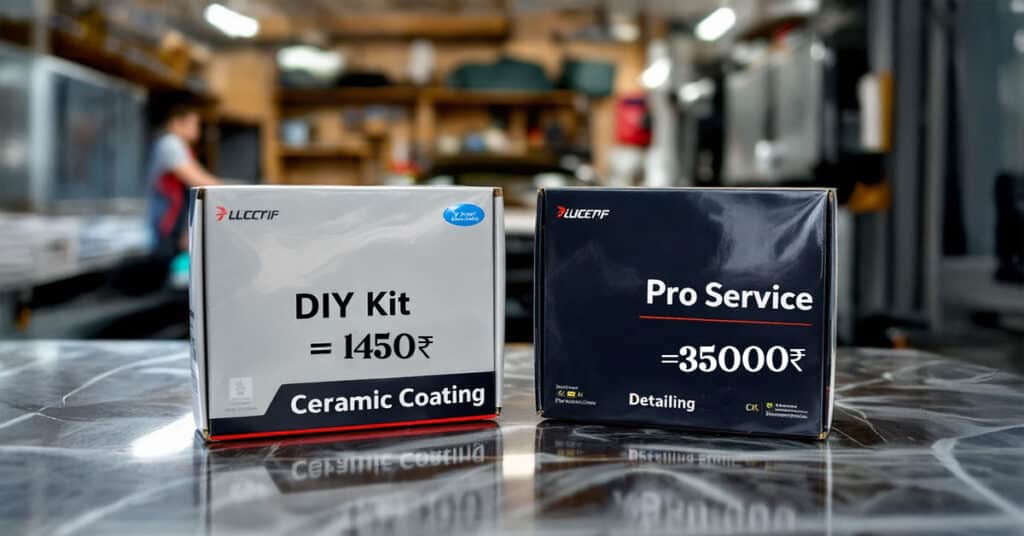
If you’re the kind of person who genuinely cares about their car’s condition — not just how it looks from the outside — this is for you. The Super Ceramic Coating Interior Kit is a 30-minute DIY application that puts a hydrophobic, UV-blocking ceramic layer on every interior surface in your car. No detailer. No appointment. No ₹5,000 professional fee.
TL;DR: UV exposure causes 40–50% of car interiors to visibly fade over time. The Super Ceramic Coating Interior Kit creates a hydrophobic, UV-resistant barrier on fiber, leather, vinyl, and plastic surfaces — repelling spills, blocking UV, and preventing cracking. At ₹1,450 with free shipping, it’s the most cost-effective interior protection available for DIYers in India.
What Actually Happens to an Unprotected Car Interior
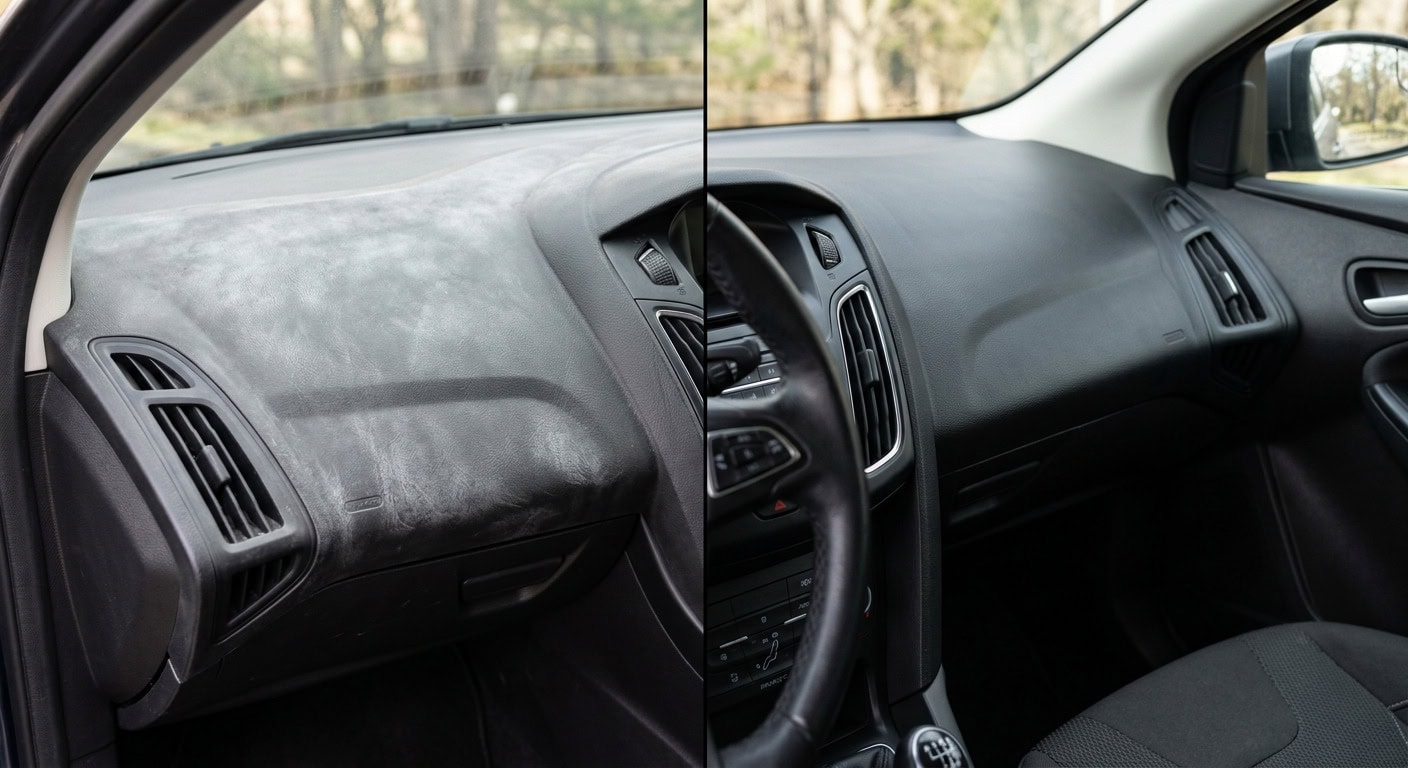
UV exposure causes 40–50% of car interiors to visibly fade within a few years under regular sunlight. In India, that timeline is compressed. Peak summer temperatures above 40°C, combined with monsoon humidity, create a two-front attack that no unprotected material survives long.
- Plastic trims — UV radiation breaks down the polymer chains, causing the surface to become chalky, dull, and eventually brittle
- Fabric and fiber seats — UV fades the dye while heat weakens the fibers. Spills that aren’t immediately cleaned bond with the degraded surface and become permanent
- Leather — Loses its natural oils under heat and UV, drying out and developing cracks that can’t be reversed without replacement
- Vinyl — Becomes stiff, loses its surface texture, and starts peeling at stress points
Regular interior cleaners remove dirt. They don’t address any of this. A ceramic coating does — because it bonds to the surface itself and creates a protective molecular layer rather than just sitting on top.
The Results: What Ceramic Coating Actually Delivers
Spills Don’t Soak In — They Bead Up and Wipe Off
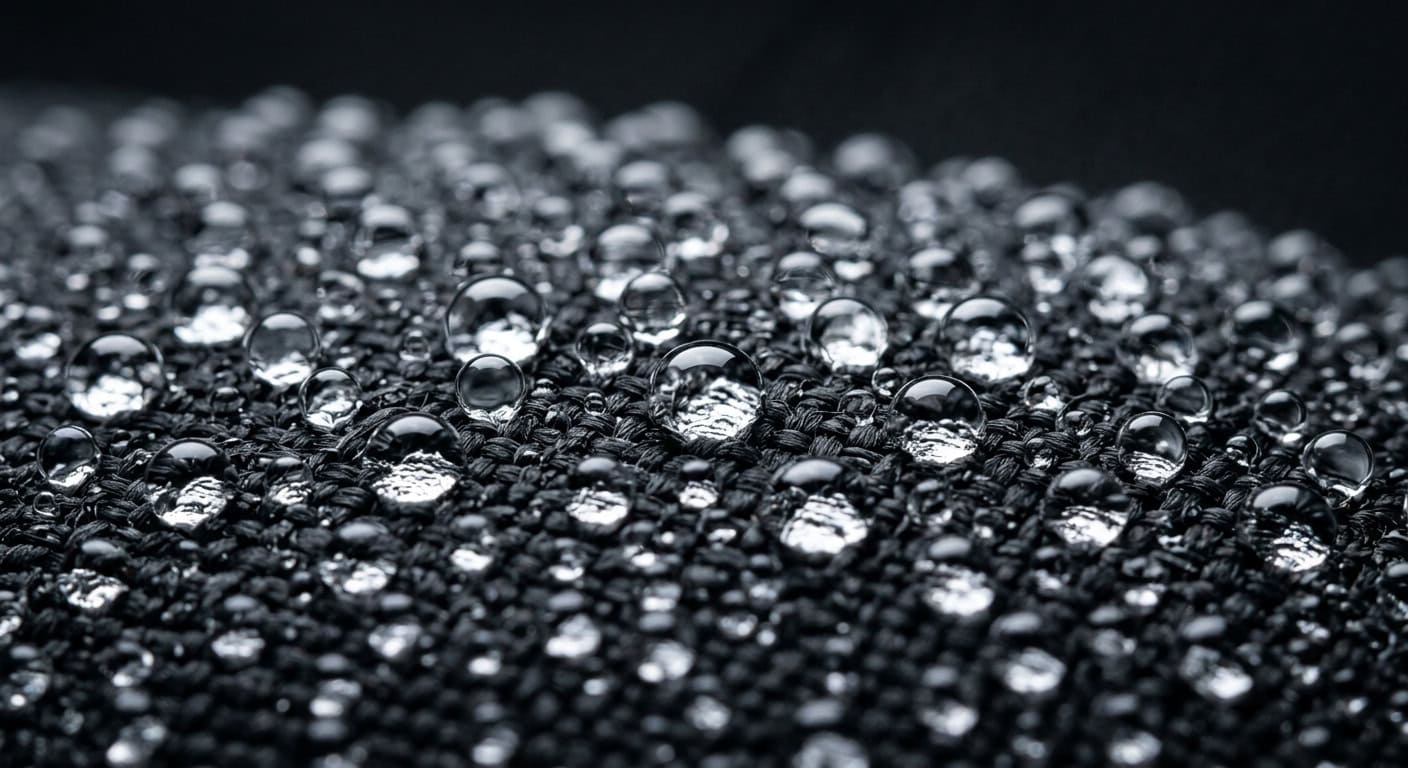
The hydrophobic effect is the most immediately satisfying benefit. Once the ceramic coating cures on your seat fabric or leather, liquid doesn’t absorb — it beads up on the surface. A quick wipe with a microfiber cloth and it’s gone. Chai, coffee, cold drink — all of it.
UV Protection That Doesn’t Wash Away
Most interior protectant sprays are temporary — one or two washes and the UV protection is gone. Ceramic coating bonds at a molecular level. The UV-blocking properties stay active for up to 12 months without reapplication, regardless of how many times you clean the surface.
Cracking and Peeling Stopped Before It Starts
Once a dashboard cracks or leather starts peeling, you can’t undo it without full replacement. Ceramic coating is preventive maintenance — it keeps the material flexible, hydrated, and structurally intact before the degradation process gets started.
Cleaning Time Cut in Half
Dust, fingerprints, and grime stick aggressively to bare surfaces. On a ceramic-coated interior, a dry microfiber wipe handles most of it. Weekly cleans that used to take 20 minutes take 8.
Resale Value Protected
Interior condition is one of the first things a buyer notices — and judges hardest. A well-maintained, crack-free interior commands a meaningfully higher price. The ₹1,450 you spend today typically returns several times over when you sell.
Which Surfaces Does It Work On?
- Fiber and fabric seats — The coating creates a hydrophobic barrier without altering the texture or breathability of the material
- Leather upholstery — Protects against staining, cracking, and fading while keeping the leather looking naturally conditioned
- Vinyl surfaces — Dashboard trim, door panels, instrument cluster surrounds
- Hard plastics — Center console, glove box, pillar trims, interior handles
One thing to note: avoid applying to soft rubber seals or super-flexible plastic components. Those do better with a dedicated rubber protectant. Everything else in your car interior? Fair game.
How to Apply the Super Ceramic Coating Interior Kit
No detailing experience required. The kit is designed for first-timers. Here’s the full process:
Step 1: Clean the Surface
Before any coating goes on, the surface must be clean and completely dry. Use a dedicated interior cleaner to remove dust, residue, and any old protectant. For fabric seats, vacuum first to pull out loose debris. Don’t skip this step — any contamination trapped under the coating will be locked in permanently.
Step 2: IPA Wipe-Down (Recommended)
Wipe the surface with isopropyl alcohol to remove lingering grease or wax residue — especially on plastic and leather. This gives the coating a clean surface to bond to and directly extends how long it lasts.
Step 3: Apply in Sections
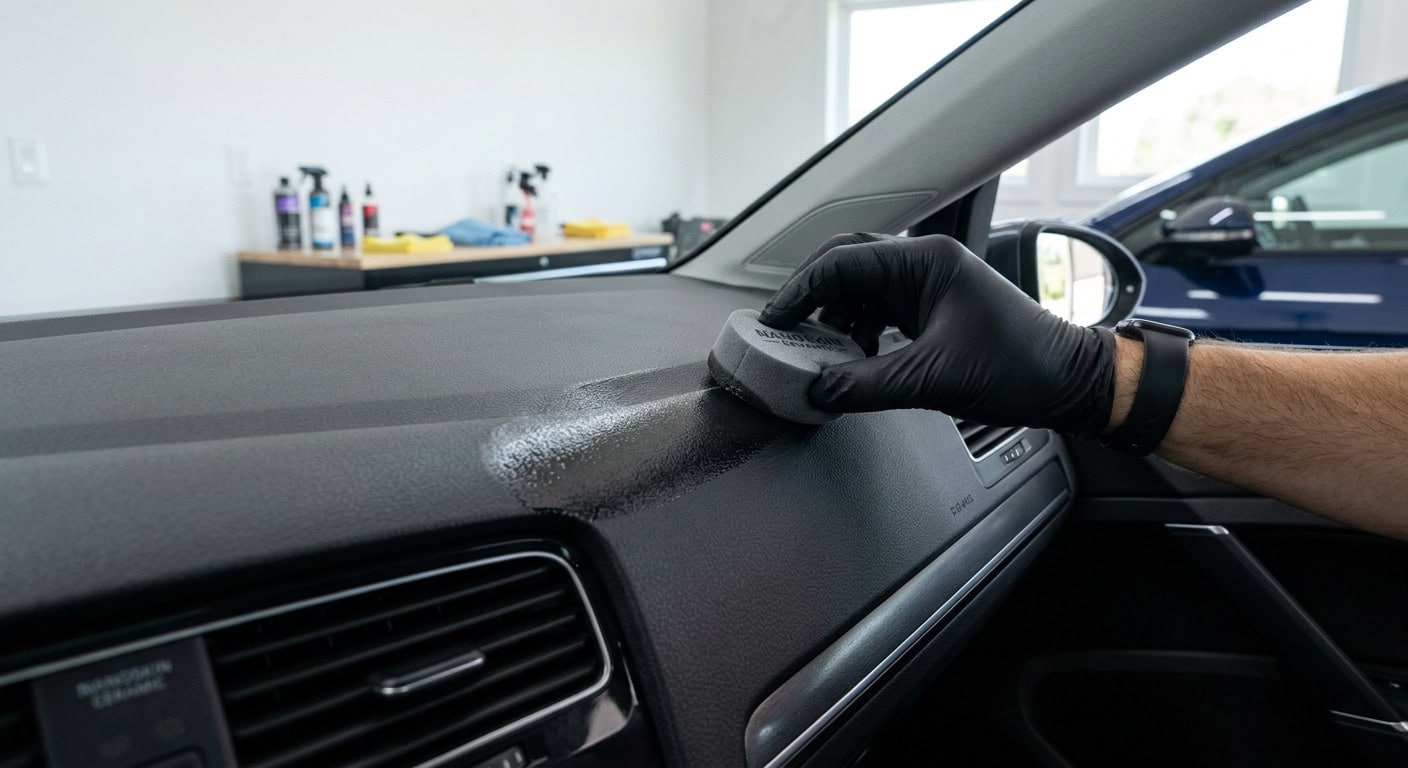
Put a few drops of the Super Ceramic Interior Coating on the included applicator and work it into the surface with circular motions. Panel by panel — don’t try to do the whole car in one pass. The coating begins to flash (visibly dry) within 1–3 minutes. In hot Indian conditions, work in small sections of 30–45 seconds each.
Step 4: Buff Off Immediately
As soon as the coating flashes, buff it off with a clean, dry microfiber cloth. Use a fresh side as you move between panels. On leather especially, don’t let it over-cure — it becomes harder to remove cleanly.
Step 5: Cure for 12–24 Hours
Initial surface dry takes minutes. Full molecular bonding happens over 12–24 hours. During this window, avoid wiping the coated surfaces and keep the car out of heavy rain if possible.
How Long Does It Last?
Under normal daily use, the Super Ceramic Interior Coating provides protection for up to 12 months. Surfaces with less daily contact — dashboard plastic, door pillars, glove box — often hold the coating longer. When water stops beading on the surface, that’s your signal to reapply.
Frequently Asked Questions
Can I use this on fabric seats?
Yes — the SCC Interior Kit is specifically formulated for fiber and fabric. On fabric, it creates a hydrophobic layer that repels liquid spills without changing the texture or breathability. It won’t make your seats feel stiff or plasticky.
Will leather seats look shiny after coating?
No — the coating adds natural depth and a conditioned look rather than a high-gloss shine. Coated leather looks healthy and well-maintained, not artificial.
Does one 30ml bottle cover an entire car?
Yes, for most standard hatchbacks and sedans — seats, dashboard, door panels, and console. For larger SUVs with full leather interiors, two kits are recommended.
How is this different from interior protectant sprays?
Protectant sprays sit on top of the surface and wash off quickly. Ceramic coating bonds at a molecular level. The UV protection and hydrophobic effects last up to 12 months vs. 1–2 washes for most spray protectants.
Is it safe for all types of interior plastic?
It’s designed for hard interior plastics — dashboard trim, door panels, console. Avoid soft, flexible rubber components and foam-backed surfaces.
The Bottom Line
If you care enough about your car to wash it regularly, you’re already halfway there. The interior is the other half — and right now it’s completely unprotected.
The Super Ceramic Coating Interior Kit fixes that in an afternoon. One application, up to 12 months of protection, and surfaces that clean themselves with a single wipe. At ₹1,450 with free shipping, it costs less than one professional interior detail — and unlike a detailing visit, the protection doesn’t vanish after the next rain.